The Cool Spaces pilot forms part of the City of Cape Town’s broader heat response initiative, offering residents a safe, cool environment during periods of extreme heat.
The pilot at Sir Lowry’s Pass Library included indoor cooling measures, access to clean drinking water, shaded outdoor areas, and information and awareness materials to support residents during periods of extreme heat. This is especially important as the City focuses on those who are most vulnerable, including the elderly, outdoor workers, children and communities in areas where increased greening is a challenge due to local conditions. Giving shelter and establishing more shaded areas across the metro is key.
It also featured child-friendly and educational activities to ensure the space is inclusive and welcoming for families.
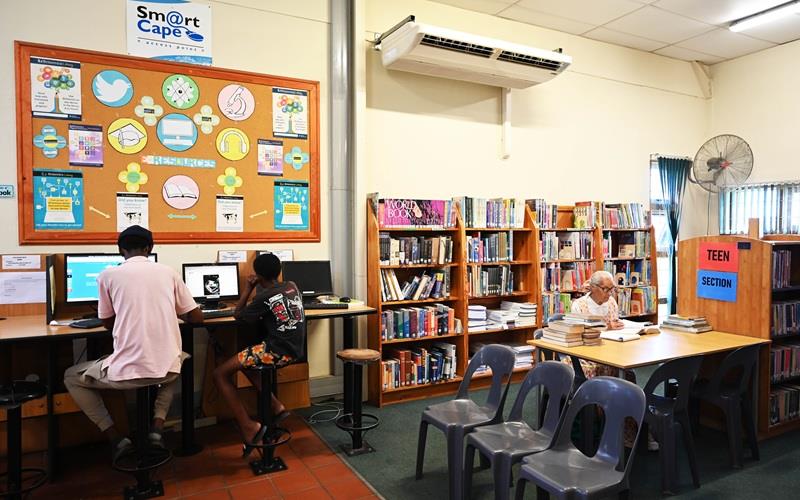
The launch brought together City officials, Library and Information Services (LIS) staff, partner departments, community members, and members of the media to demonstrate how existing public facilities can be adapted to provide safe, accessible cooling during hot days, periods of extreme heat and heatwaves.
As Cape Town continues to experience rising temperatures, the City has prioritised the development of community-based cooling interventions within its Climate Change Action Plan and Heat Action Plan. The Cool Spaces pilot forms part of this response by positioning libraries as trusted, welcoming spaces that support community wellbeing.
’Our libraries have always been welcoming spaces, and today’s launch gives new meaning to the idea of libraries as “cool spaces”. Extreme heat isn’t just about the environment, it affects people’s health and daily lives. Initiatives like Cool Spaces provide preventative support for vulnerable residents while demonstrating how public facilities can work harder for communities. With millions of visits annually, our libraries are already trusted, welcoming spaces which make them the right places to offer relief when it’s hot,’ said Mayoral Committee Member for Community Services and Health, Councillor Francine Higham, in her keynote address.
Albert Ferreira, Manager for Resilience and Climate Change and the City’s Chief Heat Officer, said the pilot reflects a practical and people-focused approach to climate adaptation.
‘Cape Town is already experiencing higher temperatures, and this trend is expected to continue. Cool Spaces are about providing immediate, accessible relief in places communities already trust. By using public facilities like libraries, we are responding proactively to heat risk while strengthening community resilience where it matters most,’ said Ferreira.
René Walker, Area Head for LIS, highlighted the importance of piloting the concept in a real community setting.
‘This pilot allows us to learn directly from how communities use and experience the space. Libraries already function as community hubs, and the Cool Spaces Pilot builds on this role by strengthening access, dignity, and resilience in response to climate realities,’ added Walker.
The Cool Spaces Pilot is the result of strong interdepartmental collaboration, with LIS, Risk and Resilience, Disaster Risk Management, Recreation and Parks, and Urban Waste Management working together to deliver a visible, practical, and people-centred intervention.
The launch programme included a Cool Space walk-through, environmental education on recycling and littering, a puppet show facilitated by Disaster Risk Management, a children’s story reading of Lulu and the Cool Space, appearances by the City’s mascots LIBee and Bingo, and recreational activities hosted by Recreation and Parks.

Insights gathered from the pilot will inform future planning and guide how similar Cool Spaces could be implemented across other public facilities in Cape Town.